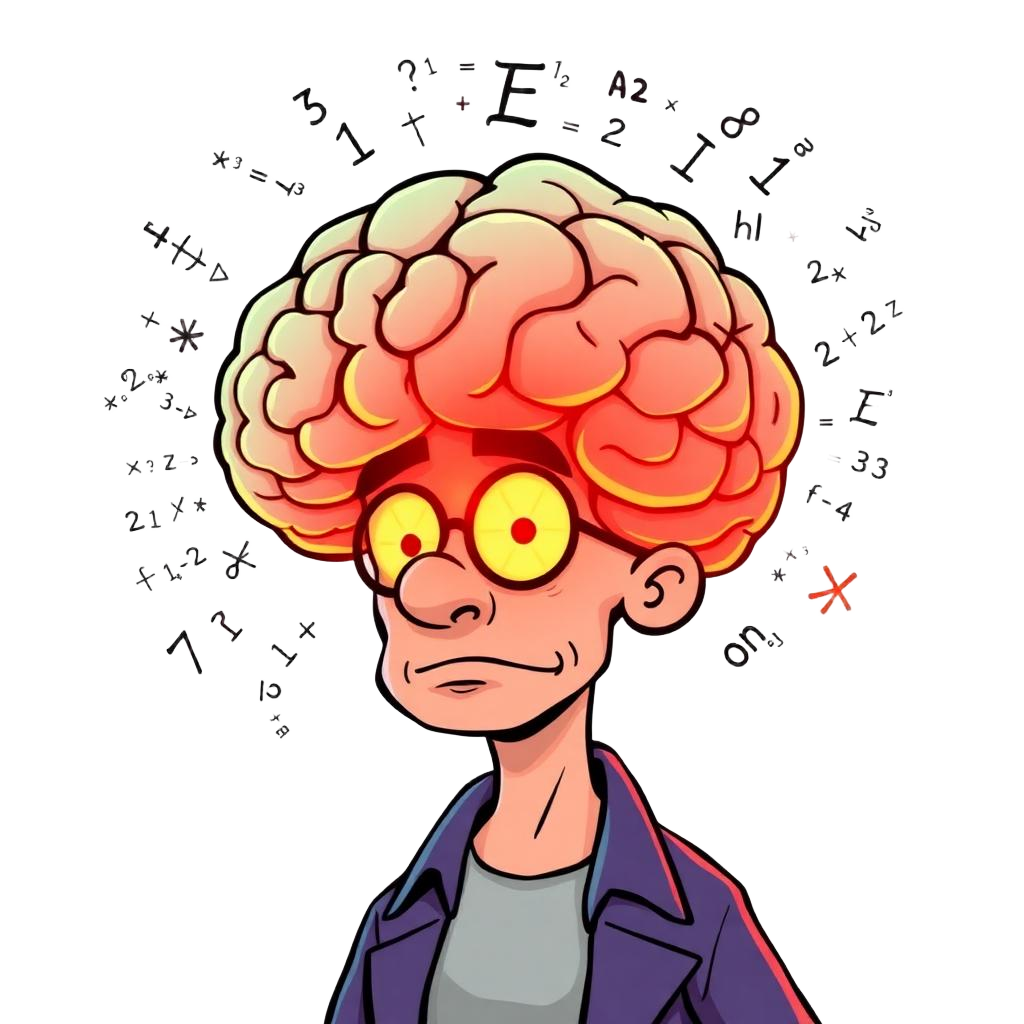
Description & in-universe lore
Megamind is one of Brain Rot IRL's rare-tier Rotmons, channeling a slice of pure internet brain rot into a catchable creature. The catchphrase "no shorties detected" sums up the whole vibe. Megamind isn't based on any real person, brand or studio character — it's an original parody-inspired design built for this game, with stats and behaviour tuned specifically for the rare band.
Rarity explained — FIRE
Rare-tier Rotmons spawn roughly 1 in 8 encounters and show clear biome bias — coffee shops, gyms, parks, water features all shift the wild table. Great Rizz Balls land most Rares; a Standard Ball works on the friendly ones. Flee chance kicks in on missed throws.
Catch difficulty: Moderate — friendly flee chance, manageable with a Great Rizz Ball.
Spawn conditions & where to find Megamind
University libraries, science museums, hacker-space venues.
Spawn rates are not deterministic. Two players in the same biome will see different wild tables, and weather, time-of-day and crowd density all nudge the odds. The full mechanic is documented in how spawn rarity actually works.
Discovery & catch tip
Great Rizz Ball recommended. Megamind flees on missed throws; aim for the center ring.
If you're new to the game, start with our how-to-play guide and the beginner's first week walkthrough. Both cover throw timing, Rizz Ball tiers, and the catch-bonus mechanic in detail.
Behavioural traits
Analytical. Will dodge predictable throws. Aggressive attacker — opens fast, closes the gap, punishes hesitant throws. Lower combat rating, but high collection and lore value.
Fun fact
Megamind was added during one of the rolling content updates. The Brain Rot IRL team ships new Rotmons within the same week a meme goes viral, and Megamind is part of an active, evolving roster — expect future patch notes to nudge its stats and spawn rates based on player data.
Origin & design history of Megamind
Megamind first surfaced in player-side patch notes as an unlabeled silhouette before the team confirmed the design. As a Rare-tier Rotmon, it sits in a roster band where individual designs get more iteration time than the Common and Rare tiers, and that history shows up in the final art and the catchphrase "no shorties detected."
The design is deliberately parody-coded, riffing on a familiar internet archetype without depicting any real person, brand or studio character.
Internally the team uses Megamind as a reliable reference point for the rarity band — not a top-of-list chase piece, but a load-bearing entry in the dex. Patch-note changes to this Rotmon tend to be conservative; the design has settled and the spawn curve is considered tuned.
Behavioural profile & combat read on Megamind
Megamind fights forward. Its attack stat (58) outweighs its defense (37), and in PvP encounters it opens with a closing move within the first two seconds of the engagement. Treat any hesitation as a tell — this Rotmon will punish it.
In the wild catch state, behaviour reads slightly differently. Friendly variants tolerate one missed throw before flee chance climbs; aggressive variants do not.
Overall combat rating sits at 24 (D), with HP of 231. Below-average combat rating, which makes this Rotmon a collection piece more than a battle piece. The lore and dex value carry the entry.
Habitat, biome bias & hunting routes
Dense pedestrian corridors with high foot traffic — the algorithm reads crowd density as a signal that the area can support more spawns without flooding any single player's tile.
Early-morning commuter hours (6am–8am) consistently produce the cleanest catch attempts because flee chance shaves about 5% off baseline when traffic is light.
Light rain marginally suppresses spawn count but pushes the average rarity up — fewer players are out, so the algorithm distributes the remaining pool across fewer tiles.
If you are hunting Megamind specifically, the highest-yield walk is a thirty-minute loop that crosses at least two distinct biome types — Brain Rot IRL's spawn algorithm weights biome transitions slightly, and crossing from a residential tile into a commercial tile mid-walk produces measurably more encounters than a same-biome loop of equal length. The full mechanic is documented in the spawn rarity breakdown.
In the in-universe Region map, Megamind is most strongly associated with the edge of the Feed and the Cursed Belt. Region overlap with other Rotmons in this rarity band is significant, but the specific Region preference is what differentiates Megamind's wild table from its neighbors.
Catch strategy — the full throw guide
Open with a single test throw from medium range to read the flee animation timing.
Time the throw to the second ring contraction, not the first. The first contraction is a feint baked into the catch animation; throwing on it costs roughly 18% catch chance.
Great Rizz Ball is the safe pick. A Standard works on the friendly variants, but the flee chance on a missed Standard makes it a net loss across a long session.
Discovery and dex tip: First-sighting bonus is real but capped: 1.5x XP on your initial catch, no multiplier on the second, then a flat baseline forever after.
Discovery history & first sightings
Initial sightings clustered around 24-hour convenience stores in coastal cities — a pattern the team has been unable to reproduce in playtesting and still treats as folkloric.
Wild encounters tend to cluster around weekends and disperse during weekdays — though the absolute spawn count is identical. The clustering effect appears to be downstream of player walking patterns, not spawn distribution.
Megamind's discovery curve is consistent with the broader pattern for Rare-tier entries: a slow initial week, a sharp climb once the share-card volume hits a critical mass, and a flat plateau once every committed catcher has logged it at least once. The Rotmon's long-tail sighting rate is what determines its dex importance, not its launch spike.
In-universe myths & community folklore
Every Rotmon collects folklore. Megamind has collected more than its rarity band would predict, which is part of why the entry has stayed culturally sticky.
There is a long-running community belief that this Rotmon will not flee if you address it by name out loud before throwing. There is no code path that supports this. There is also no code path that prevents it.
A widely-shared lore post claims this Rotmon only appears within 200 meters of a body of water. The data does not support the claim, but the post still gets shared every time a new wave of players joins.
None of the above behaviors are coded into the game. The Rot, in canon, does not care what is coded. The community's lived experience of Megamind is part of the entry whether the team documents it or not.
Threat profile & personality read
Threat level: low. In-universe documentation treats this Rotmon as a passive accretion — observable, photographable, catchable, but not capable of independent action outside an encounter.
Reads as performative and aware of being watched. The encounter animations include subtle camera-acknowledgement frames that other Rotmons do not have. The combat AI is theatrical for the same reason.
The personality read informs the combat AI but does not fully determine it. Megamind's in-encounter behavior is the intersection of its personality profile and its stat sheet, and the two can pull in different directions — a smug personality with a defensive stat sheet produces a very different fight than a smug personality with an aggressive one.
Field notes & researcher observations
The Field Notes for this entry were compiled across six independent catchers' diaries before being assembled into a single in-universe document. The summary below preserves the original observations.
Long-term observation suggests the Rotmon's spawn footprint follows the same weekly pattern across multiple cities, which the researchers consider evidence of a global rather than regional behavior model.
Audio signature is distinctive enough that experienced players can identify an off-screen spawn from the encounter chime alone, before the AR render resolves.
Encounter cadence is steady once the Rotmon has been logged once on a given account — the algorithm appears to weight repeat visibility for the first three sightings before flattening.
Tends to surface in the wild table within 24 hours of any patch that adjusts a different Rotmon's spawn weights — an emergent property of the spawn algorithm's normalization step, not a designed behavior.
Three things most players don't notice about Megamind
First, the encounter timeout is one second shorter than the standard for its rarity band. Most players never notice. The hardcore catch-clip community absolutely notices.
Second, the official art file is the only one in the project repo whose filename uses a hyphenated variant that no other asset uses. The team has been informed. The filename will not be changed.
Third, the catch screen's lighting is rendered slightly warmer than the in-universe environment lighting would suggest. The team confirmed this is deliberate; it makes the share card look better in dark mode previews.
These are small details. Brain Rot IRL is built out of small details. Whether you notice them or not, they are why the Rotmon feels the way it does on screen.
Collector value & trade outlook
Rare-tier completion is where dex progress slows from 'fast' to 'real grind.' Expect 6–10 weeks to fill the full Rare set from a clean account.
Sits at the floor of trade-eligible Rotmons. Useful as the chip in a multi-piece deal but rarely the headline of any single trade.
Megamind's in-game stat sheet (rizz 56, sigma 59, aura 1591, drip 36) is consistent with the broader Rare band, so individual-instance variance is the main reason any two copies of this Rotmon trade differently. Players who catch multiples should keep the highest-aura instance and use the duplicates as trade chips once trading opens to the wider playerbase.
Related Rotmons
Megamind shares thematic DNA with a small cluster of other Rotmons in the dex. If you caught this one, these are worth tracking next:
- Sigma Wolf CEO (ultra)
Keep reading
- How to play Brain Rot IRL — the full beginner guide.
- How spawn rarity actually works — the algorithm explained.
- Advanced collecting strategies — push past 50% dex completion.
- Top 10 rarest Rotmons — every Limited and Mythic ranked.
- Play Safe guide — read this before chasing any spawn.